> For the complete documentation index, see [llms.txt](https://sharkfoto.gitbook.io/blog/llms.txt). Markdown versions of documentation pages are available by appending `.md` to page URLs; this page is available as [Markdown](https://sharkfoto.gitbook.io/blog/ai/rethinking-video-creation-how-data-driven-ai-is-reshaping-content-production.md).
# Rethinking Video Creation: How Data-Driven AI Is Reshaping Content Production
### **Why This Topic Matters**
The rise of AI in content production is no longer just about automation. It reflects a deeper shift where structured data, behavioral signals, and machine learning models converge to reshape how content is created and distributed. Video production, once resource-intensive and time-consuming, is now becoming modular and scalable. This transition is especially evident in tools categorized as an **AI Video Generator**, where input data directly determines output quality, consistency, and relevance.
## **Understanding the Role of Data in AI Video Systems**
Modern AI video platforms operate through layered data pipelines that combine text prompts, visual datasets, and learned patterns from large-scale training models. These systems do not treat all inputs equally. Instead, they prioritize semantic clarity and contextual alignment, which explains why structured prompts often produce significantly better results than vague ones.
Unlike traditional editing tools that rely on manual manipulation, AI systems actively interpret data. They translate text into visual narratives, align pacing with tone, and structure scenes based on learned patterns. In this framework, data is not just a resource but the core driver of creative execution, fundamentally changing the role of the user from editor to director.
## **Product Context: A Closer Look at VEME**
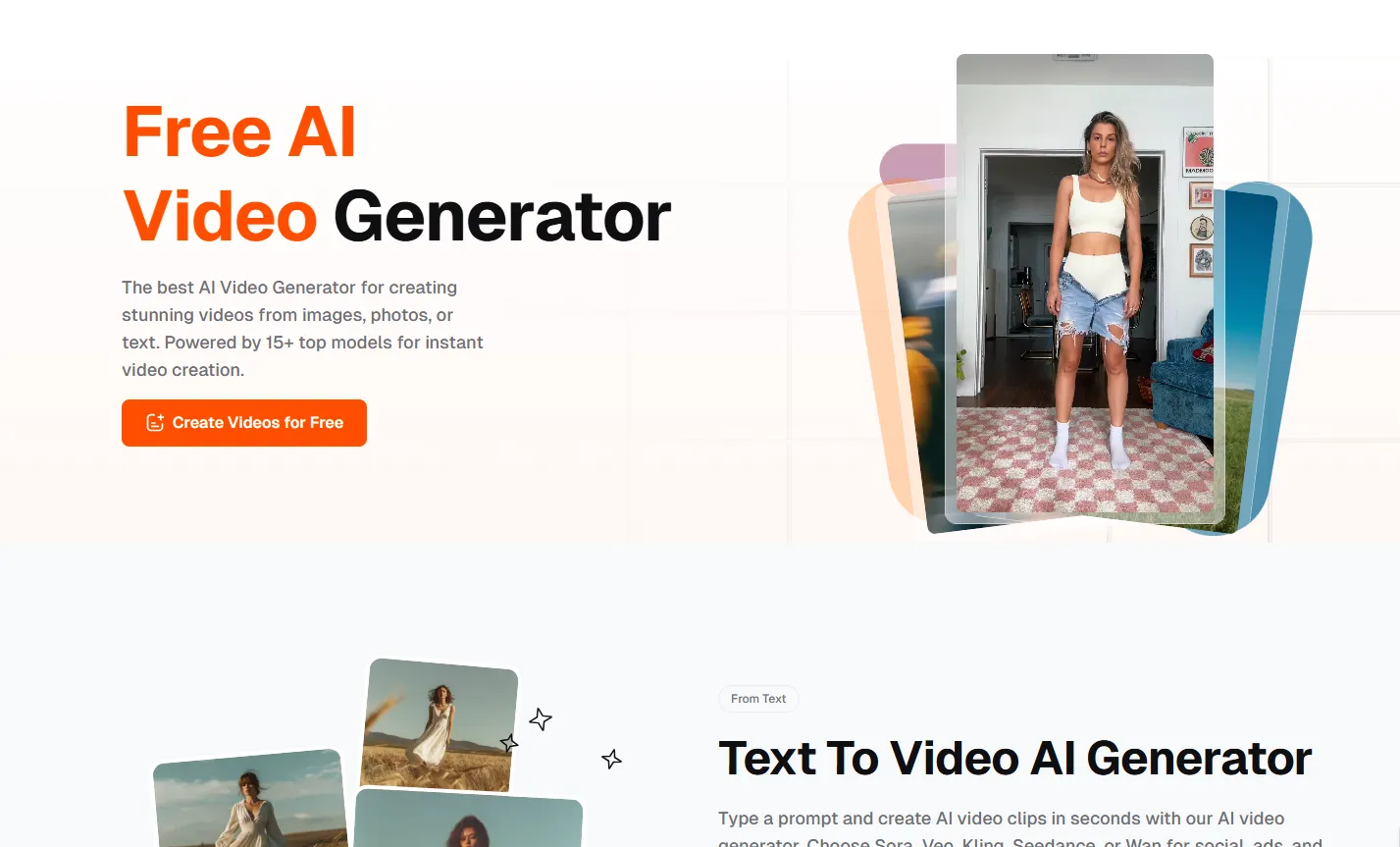
[VEME](https://www.veme.ai/) exists within the rapidly evolving ecosystem of AI-powered creative tools. It focuses on simplifying video production through structured input and automated workflows. Instead of emphasizing manual design flexibility, it leans toward intelligent interpretation, reflecting the broader industry shift toward data-centric systems.
The platform integrates text-to-video generation, automated scene composition, and template-based workflows into a unified interface. These features are designed to reduce friction in the creation process while maintaining a consistent output structure. The reliance on data modeling allows the system to produce repeatable results across different use cases, particularly in social media environments.
## **Feature Analysis Through a Data Perspective**
One of the core features is the ability to convert text into structured scenes. The system maps keywords to visual components and arranges them into a logical sequence. This removes the need for manual storyboarding and introduces efficiency in early-stage production.
Templates within VEME function as adaptive frameworks rather than fixed layouts. They respond dynamically to user input, enabling creators to maintain brand consistency while scaling production. This is particularly relevant for repetitive content formats such as short-form social videos.
Editing decisions, including transitions and pacing, are often guided by predefined algorithmic rules. These rules are trained on large datasets of existing video content, allowing the system to replicate commonly accepted visual patterns. As a result, users can achieve standardized outputs without deep technical expertise.
## **Workflow Overview: From Input to Output**
The process begins with structured input, typically in the form of text prompts or template selections. Clear and concise input improves the system’s ability to generate accurate visuals. The generation phase then processes this data through trained models to produce scenes, transitions, and visual sequences in an automated manner.
After generation, users can refine the output by adjusting scenes, styles, or sequencing. This stage introduces a level of human control while preserving the efficiency of automation. Final outputs can be exported across multiple platforms, supporting cross-channel distribution strategies. At this stage, the platform operates similarly to a standard [**AI Video Generator**](https://www.veme.ai/), but with a stronger emphasis on structured workflows and repeatability.
## **Strengths and Limitations**
Efficiency is one of the most noticeable benefits. Tasks that previously required hours of editing can now be completed in minutes. Scalability is another advantage, as users can generate multiple videos with consistent quality and minimal effort. Data-driven outputs also ensure predictable patterns, which are useful for branding and recurring content formats.
Despite these advantages, limitations remain. AI systems are inherently pattern-based, which can lead to a lack of creative nuance in more complex storytelling scenarios. Additionally, output quality is highly dependent on input quality. Poorly structured prompts often result in less coherent visuals, highlighting the importance of user input in the overall process.
## **Target User Groups**
Teams managing multiple platforms benefit significantly from automation. They can produce content at scale while maintaining consistency across channels. This reduces operational workload and improves publishing frequency.
Individual creators gain access to production capabilities that were previously resource-intensive. Marketers, in particular, can leverage these tools to test different content variations quickly, enabling faster iteration and optimization cycles based on performance data.
## **Market Impact and Industry Relevance**
The creative industry is increasingly influenced by measurable metrics such as engagement rates and viewer retention. AI tools integrate these metrics into the creation process, making content production more aligned with performance outcomes.
Speed and scalability are becoming key differentiators in digital content strategies. AI reduces the cost and time required for experimentation, allowing brands to produce more content and refine their approaches more efficiently. Within this context, an **AI Video Generator** becomes part of a broader content infrastructure rather than a standalone tool.
## **Emerging Trends in AI Video Production**
Future developments are likely to focus on personalized video content tailored to individual users. At the same time, multimodal AI systems that integrate text, audio, and visuals are becoming more advanced, leading to more cohesive outputs.
Advancements in processing speed are making real-time video generation increasingly feasible. This opens up new possibilities for live content creation and interactive media experiences, further expanding the scope of AI in video production.
## **Implications for Digital Transformation**
AI is transforming traditional linear workflows into more dynamic and parallel systems. This allows teams to allocate resources more efficiently and focus on higher-level creative decisions rather than repetitive tasks.
Organizations that effectively manage and utilize data will gain a significant advantage. AI tools amplify the value of structured data, making it a central asset in modern content strategies and digital transformation efforts.
## **Final Perspective**
VEME represents a clear example of how data-driven systems are reshaping video production. It highlights the benefits of automation and scalability while also revealing the limitations of current AI technologies.
As AI continues to evolve, tools will become more adaptive and context-aware. The role of creators will shift toward strategic oversight, while execution becomes increasingly automated. In this landscape, platforms like VEME illustrate how structured data and intelligent systems can redefine the boundaries of video creation without fully replacing human creativity.
---
# Agent Instructions
This documentation is published with GitBook. GitBook is the documentation platform designed so that both humans and AI agents can read, navigate, and reason over technical content effectively. Learn more at gitbook.com.
## Querying This Documentation
If you need additional information that is not directly available in this page, you can query the documentation dynamically by asking a question.
Perform an HTTP GET request on the current page URL with the `ask` query parameter, and the optional `goal` query parameter:
```
GET https://sharkfoto.gitbook.io/blog/ai/rethinking-video-creation-how-data-driven-ai-is-reshaping-content-production.md?ask=&goal=
```
`ask` is the immediate question: it should be specific, self-contained, and written in natural language.
`goal` is optional and describes the broader end goal you are ultimately trying to accomplish on behalf of the user. GitBook uses it to tailor the answer towards what is most useful for that goal.
The response will contain a direct answer to the question and relevant excerpts and sources from the documentation.
Use this mechanism when the answer is not explicitly present in the current page, you need clarification or additional context, or you want to retrieve related documentation sections.